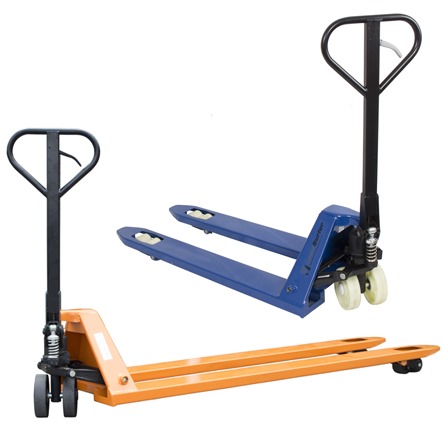
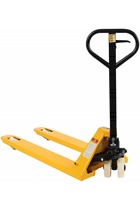
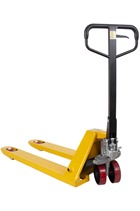
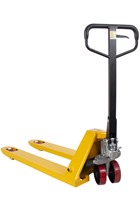
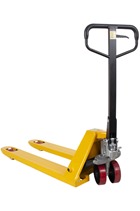
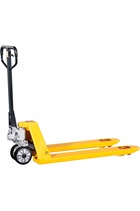
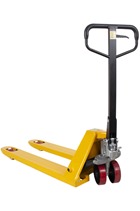
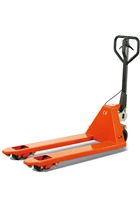
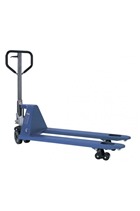
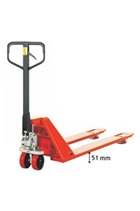
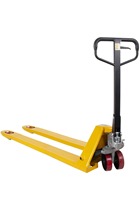
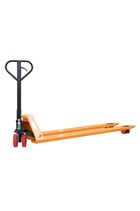
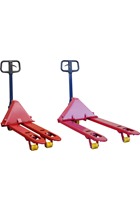
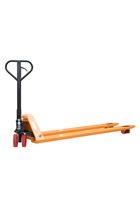
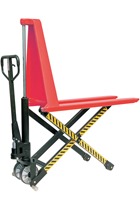
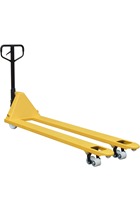
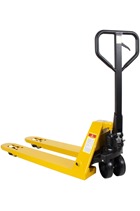
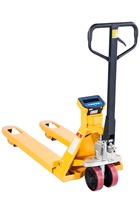
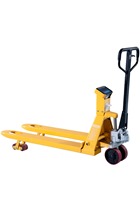
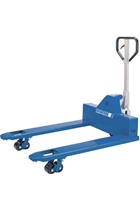
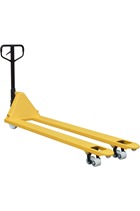
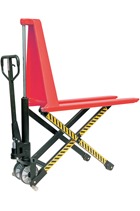
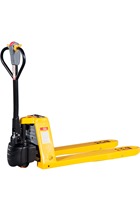
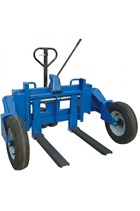
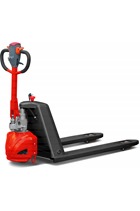
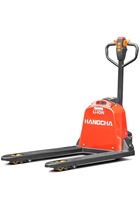
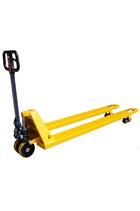
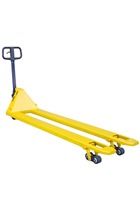
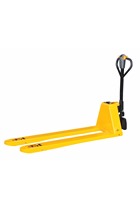
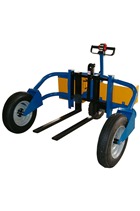
The forks slide into the pallet in their lowered position. Pumping the handle drives a small hydraulic pump that raises the forks just enough to lift the pallet clear of the floor, and the truck is then pulled or pushed on its steering wheels and the load rollers under the forks. A control lever on the handle opens the hydraulic valve to lower the load back down.
Types of pallet truck
- Manual pallet trucks: hand-pumped and hand-pulled, suited to short moves and occasional use.
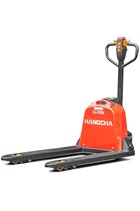
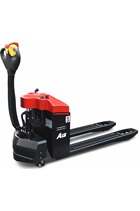
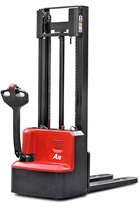
- Electric pallet trucks: battery power takes over the lifting, and on fully electric models the driving too, cutting operator effort on longer runs and frequent use.
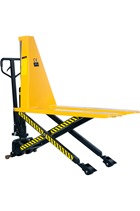
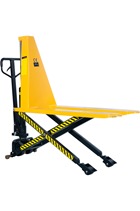
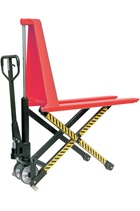
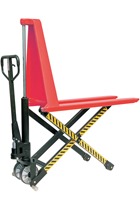
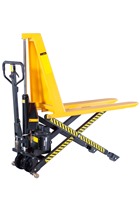
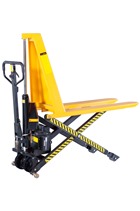
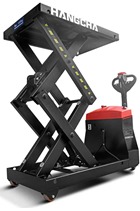
- High lift pallet trucks: raise the pallet to a comfortable working height, so it can double as a work table or loading aid.
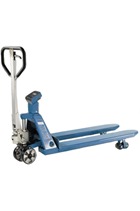
- Weighing pallet trucks: built-in scales weigh the load while it is being moved.
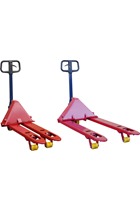
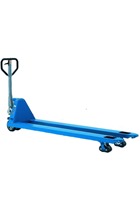
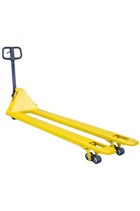
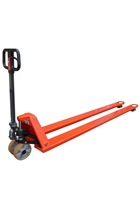
- Extra long and braked pallet trucks: longer forks for long or double loads, and a hand or parking brake for extra control when stopping and holding a load.
Choosing the Right Pallet Truck
Not sure which pallet truck to go for? The right choice depends on your load weights, pallet type and the conditions you’ll be working in. Below are the key points to consider before you buy.
1) Capacity (WLL)
Start with the maximum weight you need to move. A higher capacity pallet truck can feel more robust, but there’s no need to overspecify if you’re only handling lighter pallets. As with all lifting and handling equipment, never exceed the rated capacity of the truck.
2) Fork size and pallet type
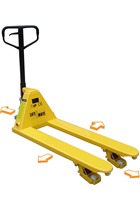
Fork width and length affect stability and manoeuvrability. A common, all-round size is 550 x 1150mm, which suits many standard pallets. If you regularly work in tight aisles, small storerooms or delivery vehicles, a shorter fork option can be easier to turn and position.
3) Working environment
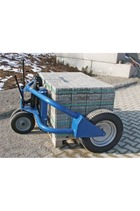
Think about where the pallet truck will be used day to day. Smooth warehouse floors are straightforward, but rough yards, thresholds and uneven surfaces can put more strain on wheels and pump units. If you’re working outdoors or in harsher conditions, look for a more heavy-duty build that’s designed to take the knocks.
4) Frequency of use
If the truck will be used continuously across shifts, it’s worth choosing a higher-quality model that’s built for regular use. For occasional movement of pallets, a dependable standard manual pallet truck may be the most cost-effective option.
5) Safety and good practice
- Keep loads stable and evenly distributed across the forks.
- Make sure the route is clear, with enough space to steer and stop safely.
- Avoid sudden turns or speed that could shift the load.
- Inspect the pallet truck regularly for leaks, damaged wheels or poor lowering control.
If you’d like help choosing a pallet truck for your site, get in touch with Safety Liftin Gear. Tell us the pallet type, typical load weight and where it will be used, and we’ll point you in the right direction.
 0117 9381 600