 0117 9381 600


A confined space is an enclosed (or mostly enclosed) area that poseses a high risk of injury or death from hazardous conditions like low oxygen, toxic fumes or engulfment. While confined spaces are often small spaces, some larger areas like grain silos are also considered confined spaces as there is limited entry and exit points and a risk of serious injury or death.
It is sometimes necessary to work in these confined spaces while carrying out repairs, maintenance and other tasks. For example, tank cleaners, mechanical fitters, industrial electricians and plumbers sometimes need to access confined spaces.
What Are the Hazards of Working in Confined Spaces?
Work in confined spaces should be avoided wherever possible. If it's unavoidable, a thorough atmospheric test and risk assessment must be carried out to identify any potential hazards so that a safety plan can be put in place.
These are the main risks of working in confined spaces:
Getting Stuck
Confined spaces can make it difficult to escape or rescue people in the event of an emergency.
Safety Consideration: There should always be a comprehensive rescue plan in place – it is not enough to rely on emergency services.
Suffocation
Confined spaces can result in insufficient oxygen levels, leading to suffocation.
Safety Consideration: If there is limited oxygen, the worker(s) must be provided with breathing apparatus. All workers must be trained in both the work itself and the use of any emergency equipment.
Concentrated Hazards
Confined spaces can concentrate hazards, making them more dangerous (e.g. harmful gases and vapours).
Safety Consideration: If the space has a risk of harmful fumes, consider how these can be ventilated or removed.
Drowning
Confined spaces increase the risk of flooding.
Safety Consideration: There should always be a trained person on standby outside the confined space to monitor conditions and assist in the event of an emergency.
Explosions
Confined spaces make explosions and fires more deadly, especially as atmospheres in confined spaces can change rapidly.
Safety Consideration: Always assess the space for flammable gases, vapours, dusts or residues that could ignite before any work begins. Continual atmospheric testing and monitoring will help to ensure that conditions remain safe.
Heatstroke/Exhaustion
Confined spaces can lead to dangerous increases in body temperature, potentially resulting in heatstroke, exhaustion and collapse.
Safety Considerations: Implement scheduled breaks to limit time spent inside the confined space and prevent overheating.
At SafetyLiftinGear, we supply a Confined Space Rescue Kit containing the essential equipment needed for rescue operations from confined spaces. This kit includes:
- 1x G-Force TM9-N Lightweight Safety Tripod
- 1x G-Force RUP502 20mtr Man Riding Rescue Winch
- 1x G-Force P10R Rescue Full Safety Harness
- 1x BW 4-Gas Detector
- 1x DRAGER 10minute Escape Kit
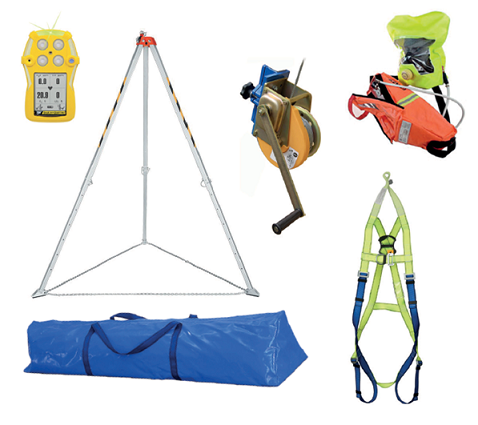
All of these products comply to EN standards and come with a 12-month warranty.
If you have any questions about our confined space rescue kit or the dangers of working in confined spaces, please don’t hesitate to contact us. A member of our team will be happy to help.

